Adidas Has Already Won the World Cup Final: The Brand Ecosystem Lesson for Founders

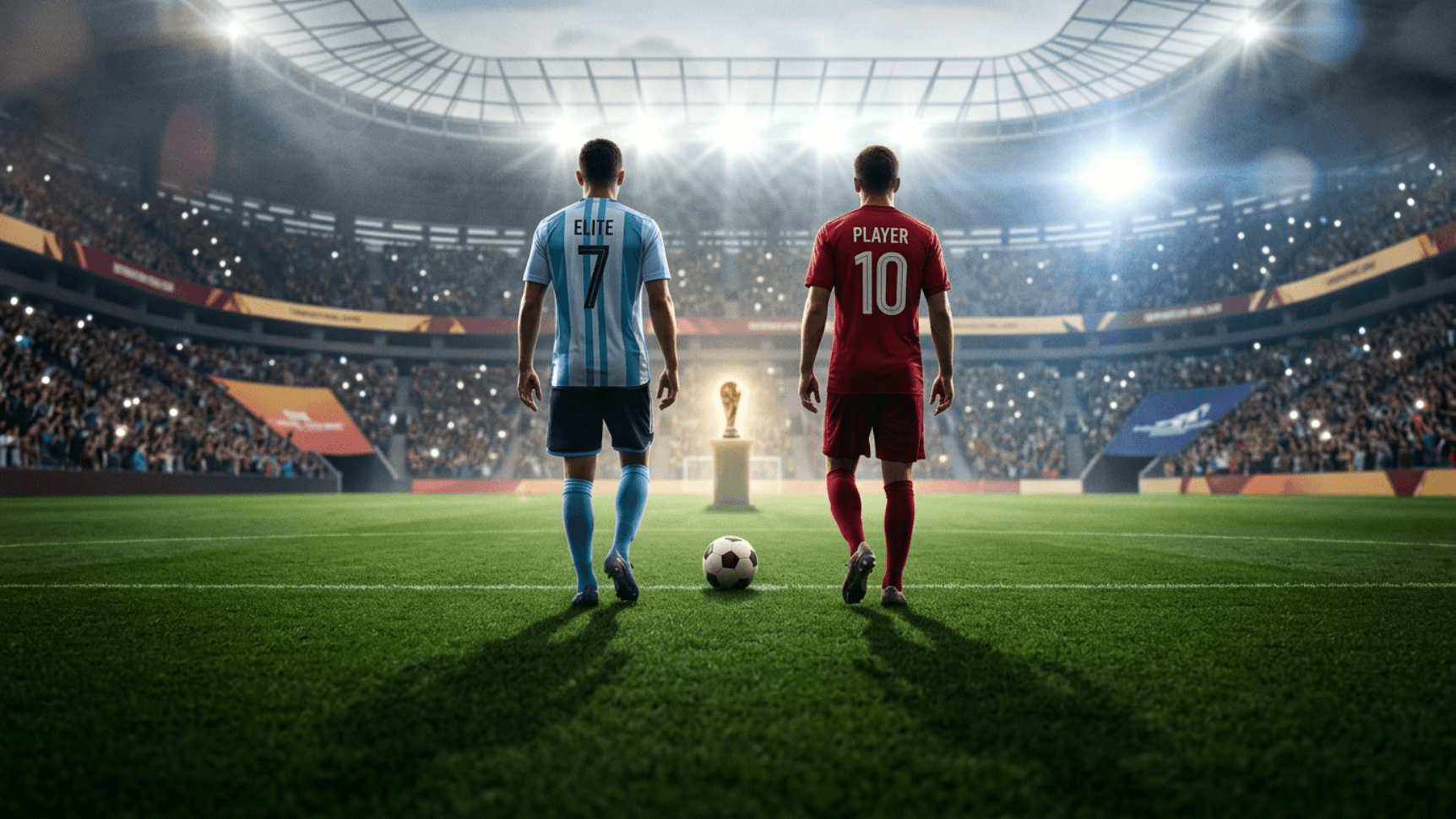
When Argentina and Spain enter the field for the 2026 FIFA World Cup final on July 19, the tournament will still need to determine a champion.
The branding contest will look considerably less uncertain.
Both finalists will wear Adidas.
Argentina secured its place by defeating Nike-sponsored England in the semifinal. Spain, also supplied by Adidas, qualified from the other side of the bracket. Regardless of who raises the trophy, the winning photographs will feature the three stripes.
Adidas will also supply the official match ball used during the final, continuing a relationship that began when the company produced the Telstar ball for the 1970 World Cup.
This gives Adidas an unusually comprehensive position around the tournament’s defining moment. It will appear on both sets of uniforms, on the ball, in retail products, throughout fan celebrations and in countless photographs that may be reused for generations.
The lesson is not simply that Adidas backed the right teams.
The lesson is that it built multiple ways to win.
Nike did not disappear
It would be misleading to interpret the final as proof that Nike’s World Cup activity failed.
Nike entered the competition outfitting 12 national teams, compared with 14 for Adidas. It supported major players, launched its “Rip the Script” campaign and generated substantial cultural engagement.
Reuters reported earlier in the tournament that 28% of Nike’s US World Cup merchandise had sold out during the opening two weeks, compared with 7% of Adidas merchandise. Nike also had slightly more starting players wearing its football boots at that stage.
Those figures demonstrate that tournament marketing cannot be judged by only one metric.
Nike could win in footwear, athlete influence, social engagement or product scarcity even without a finalist.
But the all-Adidas final gives its rival something uniquely valuable: ownership of the tournament’s closing visual narrative.
The image can outlive the campaign
Most advertising has a limited lifespan.
A television commercial stops running. A sponsored social post disappears from the feed. A billboard is replaced. A digital campaign loses attention when the budget ends.
A World Cup-winning image works differently.
The trophy celebration will appear in documentaries, news stories, player profiles, retrospectives and promotional materials for decades. Every time the image returns, the kit supplier receives another moment of visibility.
That makes the final more than a temporary advertising opportunity. It becomes a historical brand asset.
Adidas does not need to insert itself artificially into the story. It has already secured a legitimate physical presence inside it.
Adidas built an ecosystem
The company’s advantage is not based solely on the finalists’ shirts.
Adidas created culturally specific home and away kits for its partner federations. It developed the tournament’s official match ball. It released retro-inspired football apparel and surrounded the competition with fashion and entertainment collaborations.
Its 2026 World Cup activity has included work involving BAPE, Disney and Bad Bunny, allowing Adidas to move between performance sport, streetwear, entertainment and fan culture.
This creates a network effect.
The national kits promote the lifestyle collections.
The match ball reinforces Adidas’s performance credentials.
The heritage products connect the tournament to previous generations.
The collaborations reach audiences who may care more about music or fashion than football.
Retail distribution converts attention into sales.
The World Cup final then gives the entire system a dramatic cultural centre.
Adidas did not create one campaign. It created a brand environment.
The lesson for founders
Small businesses cannot sponsor fourteen national football teams. They can still apply the underlying strategy.
Many founders build their marketing around a single potential point of success.
They depend on Google Ads to generate leads.
They rely on one major corporate customer.
They expect the founder’s LinkedIn account to provide all brand visibility.
They sell one flagship product.
They associate the company with one charismatic spokesperson.
This can work—until the platform changes, the customer leaves, the product becomes outdated or the spokesperson creates a problem.
A resilient brand develops several connected assets.
A consulting firm might combine founder expertise, a proprietary framework, useful research, client case studies, an email audience and a recognizable visual identity.
A technology company might build product innovation, community, educational content, integration partnerships and distinctive language around the category it serves.
A sports club might create leagues, events, coaching programmes, social rituals, merchandise and local partnerships.
Each asset can generate attention independently. Together, they reinforce the same identity.
Do not confuse diversification with inconsistency
Creating multiple ways to win does not mean doing everything.
Random activity fragments a brand. Connected activity compounds it.
Adidas can sell national-team shirts, historic products, fashion collaborations and match balls because all of them reinforce its established relationship with football.
The common thread matters.
Founders should therefore identify one clear strategic position and create several expressions of it.
The channels may change. The message should remain recognizable.
Branding the outcome
Companies cannot control cultural events, market conditions or competitive results.
Adidas could not guarantee that Argentina and Spain would reach the final.
What it could do was build enough credible relationships around the tournament that several favourable outcomes were possible.
Had England advanced, Nike would have retained representation. Had another Adidas team succeeded, the brand would still have benefited. Its official-ball relationship provided baseline visibility regardless of the participating teams.
This is the deeper branding lesson from the all-Adidas final:
Do not bet the company on predicting the winning outcome. Build a brand capable of benefiting from several outcomes.
The best brands are not supported by one brilliant campaign.
They are supported by systems of distinctive, connected assets that become more valuable when the right cultural moment arrives.
On July 19, either Argentina or Spain will win the World Cup.
Adidas has already ensured that its brand will be part of the answer.
Your business should have more than one way to be discovered, remembered and chosen. Brandivo helps founders develop the names, identities and brand assets that work together as a complete system. Explore the platform at mybrandivo.com.